by Cieslafdn | Feb 16, 2018 | Baseball, Moe Berg, Uncategorized
Baseball Pitchers and Catchers have reported to Spring training and are back in action! MLB teams are reporting to sunny Florida and Arizona in preparation for the 2018 season. Moe Berg spent 15 years in major-league ball with most of them as a catcher.
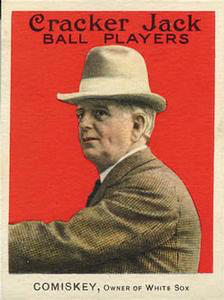
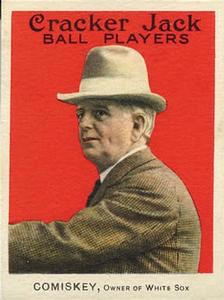 In 1926 White Sox owner Charles Comiskey granted Berg’s request to miss spring training so he could finish the semester at Columbia law School. However, in February of 1927, Moe contacted Charles Comiskey to request permission to report late for spring training again. Comiskey wrote back ”My Dear Young Man, The time has come when you must decide as to the profession you intend following. If it is baseball, then it is most essential and important to the club and yourself that you report for spring training. Whether or not you decide to play baseball, the Chicago Club must continue, so you may rest assured that whatever action you take will make no difference to us.” Berg wrote back, unconvinced, and Comiskey’s next letter read, “should you decide that you would report for spring training, I might tender you a contract with an increase over the contract which you now have in your possession.” Berg did want to play baseball, so he got a leave of absence from the law school dean for the remainder of the academic year. As a result of reporting late, he spent the first three months of 1927 on the bench and that was when Manager Ray Schalk yelled, “Get me another catcher, quick.” Berg told the manager that the team already had another catcher – referring to Earl Sheely, but Schalk misunderstood and thought Berg was volunteering so put him in as catcher. Moe did eventually complete his law studies at Columbia (his father wanted him to be a lawyer) and received his degree in 1930.
by Cieslafdn | Dec 18, 2017 | Uncategorized
From a new collection of poems “If God Invented Baseball”
By E. Ethelbert Miller
What man doesn’t have secrets?
What man doesn’t wear a mask?
Every catcher hides his signs
from the man on second
and from the rest of the world.
If Moe Berg was a spy
he was our spy
protecting home.
Behind every catcher
only a lonely umpire
calling the game like God.
by Cieslafdn | Nov 30, 2017 | Uncategorized
November 30, 2017
The Sundance Film Festival yesterday announced its lineup for 2018, which included the feature film about Moe Berg, The Catcher Was a Spy. The film, directed by Ben Lewin, will have its world premiere at the festival, which takes place annually in Salt Lake City, Utah.
This feature film on Moe Berg, which is loosely based on the book of the same name by Nicholas Dawidoff, stars Paul Rudd as Moe, Sienna Miller as Estella (Moe’s love interest), Jeff Daniels as Wild Bill Donovan (the head of the OSS who recruited Moe), Mark Strong as Werner Heisenberg (who we know Moe met with to determine the status of the German nuclear project), and Tom Wilkinson and Paul Giamatti as physicists Moe interacted with.
We are so excited to see this feature adaptation of Moe’s story. Looking forward to seeing Paul Rudd sport Moe’s usual dark suits!
Read more about the Sundance lineup and the Moe Berg feature film at this link.
by Cieslafdn | Nov 15, 2017 | Uncategorized
November 15, 2017
Bobby Doerr, the Hall of Fame second baseman dubbed the “Silent Captain” of the Boston Red Sox by longtime teammate and friend Ted Williams, has died. Doerr died on Monday October 13 at the age of 99. He played on the same Red Sox team as Moe Berg in the 1937, 1938, and 1939 seasons and was one of the players Moe coached on the Red Sox in the 1940 and 1941 seasons.
In the statement released by the Red Sox on Tuesday October 14, Red Sox owner John Henry said: “Bobby Doerr was part of an era of baseball giants and stood out as one himself. And even with his Hall of Fame achievements at second base, his character and personality outshined it all. He will be missed.”
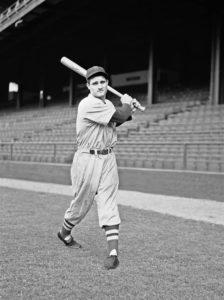
Bobby Doerr pictured in 1942 (Source: NBCNews/AP)
Doerr was signed out of the old Pacific Coast League in 1937, where he had played for the San Diego Padres with Ted Williams, who was signed to the Red Sox out of the same scouting trip. In 1938, Doerr became a regular in the Red Sox lineup as their second baseman. Doerr played 14 seasons with the Red Sox and joined his old friend Ted Williams in the Hall of Fame in 1986. He had a .288 career average, helped the Red Sox to the 1946 World Series, and was a nine-time All-Star.
In 1988, the Red Sox retired his No. 1 jersey at Fenway Park and the team honored Doerr with a 2004 World Series ring after breaking their 86-year championship drought.
Doerr, who was known for being modest, finished his career with 2,042 hits, 223 home runs and 1,247 RBIs. His six seasons with at least 100 RBIs was not matched by another second baseman for 25 years. He was frequently cited one of the best AL fielders.
After retiring as a player, Doerr returned to the Red Sox first as a scout from 1957-1966 and then as the first base coach from 1967-1969. He then became the hitting coach for the Toronto Blue Jays from 1977-1981.
Doerr’s friendship with Ted Williams, Johnny Pesky and Dom DiMaggio is well known and commemorated in a statue unveiled at Fenway in 2010. He also played on the team with Hall of Famers Joe Cronin, Jimmie Foxx, and Lefty Grove.
Doerr retired to Junction City, Oregon with his wife, Monica Roseman Terpin, and their son, Don. When asked if he wished he played “now,” in 1990, Doerr responded: “No. I know the money is better, but I just feel fortunate to have played then. I think we had more fun. We played the game hard, but there is so much pressure on these guys.”
Bobby Doerr was the oldest living Major League Baseball player and was the last living person who played in the major leagues in the 1930s. We join the baseball community in mourning his passing and remembering his legacy as on of the Red Sox greats from the Golden Age of baseball.
For more on Bobby Doerr and his legacy, see this link.
by Cieslafdn | Nov 14, 2017 | Uncategorized
by: DANIEL E. SLOTNIK NOV. 9, 2017
Ray Robinson, a longtime magazine editor who wrote well-received biographies of baseball stars from his youth like Christy Mathewson and Lou Gehrig, died on Nov. 1 in Manhattan. He was 96.
His daughter, Nancy Miringoff, said he died a day after having a stroke.
For many years Mr. Robinson made a living as an editor at magazines like Seventeen and Good Housekeeping, but baseball and other sports were always his passion. Though he was never a professional baseball reporter, his life was so infused with the game that he could, and did, more than hold his own in discussions about the sport.
His biographies include “Matty, an American Hero: Christy Mathewson of the New York Giants” (1994), about the star pitcher of the early 20th century, and “Rockne of Notre Dame: The Making of a Football Legend” (1999), about the celebrated Notre Dame football coach.
His sportswriting, which mixed careful research with personal recollections, was more realistic than reverential.
“He could be trusted not to exaggerate a story or a fact; it was what it was, and you could trust Ray’s memory,” Marty Appel, the author of “Pinstripe Empire: The New York Yankees From Before the Babe to After the Boss” (2012) and other baseball books, said in an interview on Tuesday.
One of Mr. Robinson’s favorite players, and subjects, was Gehrig, the Hall of Fame Yankee first baseman who long held the record for consecutive games played, with 2,130, and who died at 37 from amyotrophic lateral sclerosis, a degenerative ailment now widely known as Lou Gehrig’s disease.
In many articles and in the book “Iron Horse: Lou Gehrig in His Time” (1990), Mr. Robinson portrayed the famously humble and hard-working Gehrig as a human being instead of the mythical hero many see him as, without hiding his own reverence.
Mr. Robinson at Magazine Management, where he worked as an editor, in the 1950s.
“Suited up, Gehrig looked bovine, unathletic,” Mr. Robinson wrote. “His appearance earned him the uncomely nickname of ‘Biscuit Pants.’ But shouldn’t one win points for modesty, decency and determination? I thought so, and of all the Yankees, it was Lou I cherished the most.”
One undeniably superhuman moment of Gehrig’s career was his farewell speech at Yankee Stadium on July 4, 1939. Mr. Robinson, who was there and called the speech “baseball’s Gettysburg Address,” told The Daily News in 2014 that the sound system made it hard to make out all of Gehrig’s words, but that an almost religious solemnity descended over the stadium as Gehrig spoke.
“I have no way of knowing if 60,000 people were crying,” he said, “but I had tears in my eyes.”
Full Article: here
by Cieslafdn | Nov 1, 2017 | Uncategorized
Joc Pederson of the Los Angeles Dodgers has set a new home run record for Jewish players in one World Series.
Pederson, a lefty-swinging outfielder, blasted a homer in the seventh inning of his club’s 3-1 win over the visiting Houston Astros in Game 6. The shot, to left field, was his third of the Series and moved Pederson past Hall of Famer Hank Greenberg, the Detroit Tigers’ slugger who had two homers in the 1934 Fall Classic.
Greenberg still holds the mark for most runs batted in by a Jewish player in one World Series — at least for now, since there’s another game left — with seven. Pederson has five, as does Alex Bregman, the Astros’ Jewish third baseman, along with two home runs.
Written by Ron Kaplan.
Link to full article

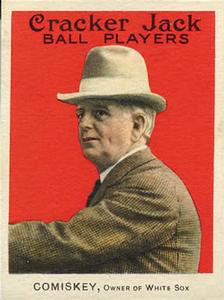 In 1926 White Sox owner Charles Comiskey granted Berg’s request to miss spring training so he could finish the semester at Columbia law School. However, in February of 1927, Moe contacted Charles Comiskey to request permission to report late for spring training again. Comiskey wrote back ”My Dear Young Man, The time has come when you must decide as to the profession you intend following. If it is baseball, then it is most essential and important to the club and yourself that you report for spring training. Whether or not you decide to play baseball, the Chicago Club must continue, so you may rest assured that whatever action you take will make no difference to us.” Berg wrote back, unconvinced, and Comiskey’s next letter read, “should you decide that you would report for spring training, I might tender you a contract with an increase over the contract which you now have in your possession.” Berg did want to play baseball, so he got a leave of absence from the law school dean for the remainder of the academic year. As a result of reporting late, he spent the first three months of 1927 on the bench and that was when Manager Ray Schalk yelled, “Get me another catcher, quick.” Berg told the manager that the team already had another catcher – referring to Earl Sheely, but Schalk misunderstood and thought Berg was volunteering so put him in as catcher. Moe did eventually complete his law studies at Columbia (his father wanted him to be a lawyer) and received his degree in 1930.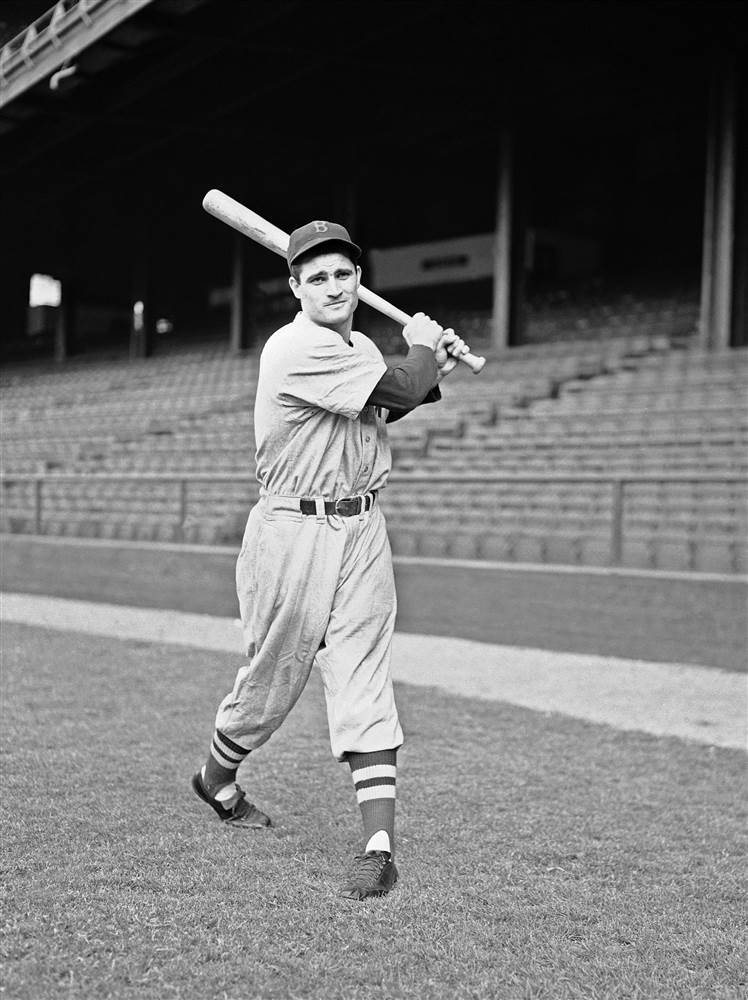
Recent Comments