by Cieslafdn | Dec 20, 2018 | Uncategorized
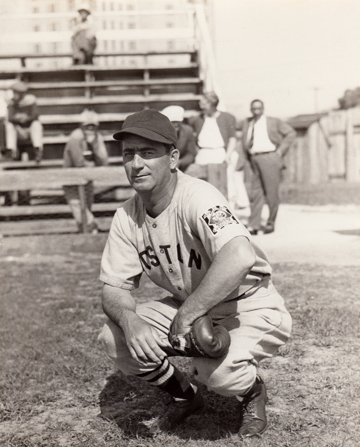
Moe Berg played with Walter Johnson, featured in a recent article from the Washington Post. Johnson is a character in The Ciesla Foundation’s upcoming documentary on Moe Berg and his grandson is interviewed.
To read the article, click here.
by Cieslafdn | Dec 4, 2018 | Uncategorized
On December 7, 1941, the Japanese attacked Pearl Harbor. The attack led the United States to formally enter World War II and prompted Moe Berg to retire from baseball and take a post as a Goodwill Ambassador to Latin America. Before he left for South America, Berg made a radio broadcast.
On February 24, 1942, Berg spoke directly to the Japanese people. To quote his biographers Harold and Meir Ribalow, “In fluent Japanese, [Moe Berg] pleaded at length, ‘as a friend of the Japanese people,’ for the Japanese to avoid a war ‘you cannot win.’” The Ribalows report, “Berg’s address was so effective that several Japanese confirmed afterward they had wept while listening.” To read more about the address, visit Moe Berg Blog.
Berg had gained his Japanese language skills during an American All-Star tour in Japan in 1934. By that time Japan was openly at odds with the United States. Even though large crowds still gathered to see Babe Ruth, paranoia was everywhere. In his book “The Catcher Was a Spy” Nicholas Dawidoff, an interviewee in Aviva Kempner’s upcoming film on Berg, tells of the “manic fear of spies’ that was encouraged by Japanese newspapers. He says the Japanese thought every foreigner “came ostensibly as tourists, but in reality as military observers.”
When he first arrived, Berg knew little Japanese. He eventually proved his reputation as a quick study correct which he rapidly picked up the language. In the years after the trip, Berg often shared the story of an exchange he had with Ruth about his linguistic skills. According to the retelling in Dawidoff’s book, Ruth asked Berg, “You’re such a linguist; do you speak Japanese?” Berg responded, “No, I never had occasion to learn it.”
Two weeks later Ruth overheard Berg greeting someone at a ship dock in Japanese. Ruth said to Berg, “Wait a minute, you told me you didn’t speak Japanese.” Berg replied, “That was two weeks ago.”
Berg had taken a 16-mm automatic movie camera with him; he had been contracted by a New York newsreel company to film sights from his trip. Soon after the radio broadcast, Berg contacted the FBI and offered to share the footage he had taken. Robert K. Fitts, who is another interviewee in Kempner’s upcoming documentary, recounts this in his book, “Banzai Babe Ruth.” One film of particular interest was a shot Berg had filmed from the rooftop of the St. Luke’s Tower, one of Tokyo’s tallest buildings that Berg talked his way into using his linguist skills. The FBI found this footage intriguing and suggested he show it the Office of Strategic Services (OSS). Some say this footage was later used to plan the bombing over Tokyo during World War II.
Berg went on to his post in South America and returned in February of 1943. Upon his return, he joined the OSS. To learn more about Moe Berg’s time in Japan and his service in the OSS, please visit http://moebergfilm.org/.
by Cieslafdn | Nov 16, 2018 | Uncategorized
Baseball legend George Herman “Babe” Ruth will receive the Presidential Medal of Freedom, the United State’s highest civilian honor, today Friday, November 16. A White House press release listed Ruth among seven American icons who will be honored. His career spanned 22 seasons, from 1914 through 1935. He was with the Yankees for 15 seasons, leading them to seven American League championships and four World Series Titles.
The first baseball player to receive the Presidential Medal of Freedom was Morris “Moe” Berg, in 1945, from President Harry S. Truman. Berg was honored because of his service with the Office of Strategic Service (OSS) in the war after his Major League Baseball career was over. To learn more about other baseball players awarded the medal click here: http://bit.ly/2zd7acH
Babe Ruth and Morris “Moe” Berg traveled together to Japan in 1934 on an
American All-Star Baseball tour. Fascinating details about the trip and their
friendship will be featured in Aviva Kempner’s upcoming full-length
documentary about Moe Berg. Robert Fitts, author of Banzai Babe Ruth,
Vernona Gomez, daughter of Lefty Gomez and author of Lefty, An American Odyssey, and Julia Ruth Stevens, daughter of Babe Ruth, are all featured in the film. Home movies from Jimmie Foxx and Lefty Gomez featuring the Japan trip will also be included.
Julia Ruth Stevens and her family shared a statement about the award. They write, “One lesser known aspect of Babe’s life of which we are most proud are his efforts off the field, especially with children. Throughout his life, Babe visited thousands of children in hospitals and orphanages, often at considerable inconvenience. He regularly could be found standing outside the stadium for hours after baseball games, signing autographs. He paid hospital bills for people he barely knew. He supported over 100 charities and foundations over the course of his life. The family statement continues, “Of German descent himself, Babe publicly spoke out against the German persecution of Jews in the years leading up to the American entry into WWII and participated in numerous charitable events that raised funds for the war effort.”
Ruth is also known for using his famous name by participating in the German-American protest against the Holocaust, and helping to attract public attention to the Jews’ plight. Timing is everything, both on the baseball field and beyond, and the timing of Ruth’s protest was crucial: Precisely at the moment when U.S. officials were hoping to brush the Jewish refugee problem aside, Babe Ruth helped keep it front and center. During the last week of December 1942, the “Christmas Declaration by men and women of German ancestry,” appeared as a full-page ad in the New York Times and nine other major daily newspapers.
“We Americans of German descent raise our voices in denunciation of the Hitler policy of cold-blooded extermination of the Jews of Europe and against the barbarities committed by the Nazis against all other innocent peoples under their sway,” the declaration began. “These horrors…are in particular, a challenge to those who, like ourselves are descendants of the Germany that once stood in the foremost ranks of civilization.” The ad went on to “utterly repudiate every thought and deed of Hitler and his Nazis,” and urged the people of Germany “to overthrow a regime which is in the infamy of Germany history.” Read more about it here: http://bit.ly/2PXe93c
Ruth’s family says that “Everyone was equal in the Babe’s eyes – rich or poor, white or black. Living in a time when segregation was a common fact of life, he called many African Americans friends, including Joe Louis and Bill “Bojangles” Robinson. He regularly barnstormed during the offseason against Negro League teams and promoted the concept of integrated baseball well ahead of its time. Sadly, it was this open-mindedness, his advocacy for player’s rights, and his general outspokenness, that likely prevented him from fulfilling his other lifelong dream – to manage a Major League Team.”
We at Ciesla, salute Babe Ruth for being a true American Hero and are excited to see him recognized with the Presidential Medal of Freedom for his many contributions to American culture.
by Cieslafdn | Nov 12, 2018 | Uncategorized
(January 1, 1883 – February 8, 1959)
As leaders gather in Paris to commemorate the end of World War 1, The Ciesla Foundation would like to share the story of a hero, General William J. “Wild Bill” Donovan.
In 1907, Donovan graduated from Columbia Law School and entered private practice.
In search of a way to serve his country, Donovan joined the New York National Guard in 1912 as a captain. He became part of the 69th “Fighting Irish” Regiment. Donovan also served on the Mexican border in 1916 after his guard regiment was called into federal service to assist the U.S. Army in tracking down the Mexican bandit Pancho Villa.
During World War I, Donovan served his country again, when his regiment was called into federal service. Donovan then became part of the 165th Regiment of the U.S. Army, also known as the “Rainbow” Division because of the cross-country makeup of its ranks. During his time leading the regiment, Donovan earned his nickname “Wild Bill.” The men in his battalion called him “Wild Bill” out of admiration for his coolness and resourcefulness during combat and because of the hard physical drills, he made them do to prepare for battle.
On July 11, 1941, after the shock of Pearl Harbor earlier that year, President Roosevelt appointed Gen. William J. Donovan, a decorated veteran of World War I and also known as “Wild Bill” Donovan to become the Director of the Office of the Coordination of Information (COI), The COI coordinated information collected abroad for the president. After the United States became involved in World War II, the COI became the Office of Strategic Services (OSS) in June 1942, with Donovan still in charge.
Donovan became known as the “Father of American Intelligence.”
He was an American soldier, lawyer, intelligence officer and diplomat. He was wounded in action three times during World War I. On July 18, 1918, for bravery under fire on the River Ourcq during the Second Battle of the Marne, he was awarded the Medal of Honor. By the end of the war, Donovan had been promoted to colonel and was one of the most decorated soldiers of World War I. Upon returning from Europe after World War I, Donovan — along with Theodore Roosevelt, Jr. — was a co-founder of the American Legion.
He is the only person to have received all four of the United States’ highest awards: The Medal of Honor, the Distinguished Service Cross, the Distinguished Service Medal, and the National Security Medal. He is also a recipient of the Silver Star and Purple Heart, as well as decorations from a number of other nations for his service during both World Wars.
The OSS consisted of men and women from many areas and backgrounds — lawyers, historians, bankers, baseball players, actors, and businessmen. Their assignment was to conduct espionage, sabotage, and morale operations against the Axis powers, and conduct in-depth research and analysis on the nation’s enemies and their capabilities.
One of Donovan’s accomplishments in WWII was hiring Moe Berg, former major league baseball player, to work with the OSS and providing the US government with information about Germany’s efforts to develop an atomic weapon. Moe Berg gathered intelligence and contacted Italian scientists in an effort to keep them from working with the Nazis. He was sent to Zurich to attend a lecture given by Werner Heisenberg and determine the likelihood of a German A-bomb. He was given a gun to assassinate Heisenberg if necessary and a cyanide pill to take himself.
Upon learning of General Donovan’s death in 1959, President Eisenhower said: “What a man! We have lost the last hero.”
by Cieslafdn | Jul 23, 2018 | Uncategorized
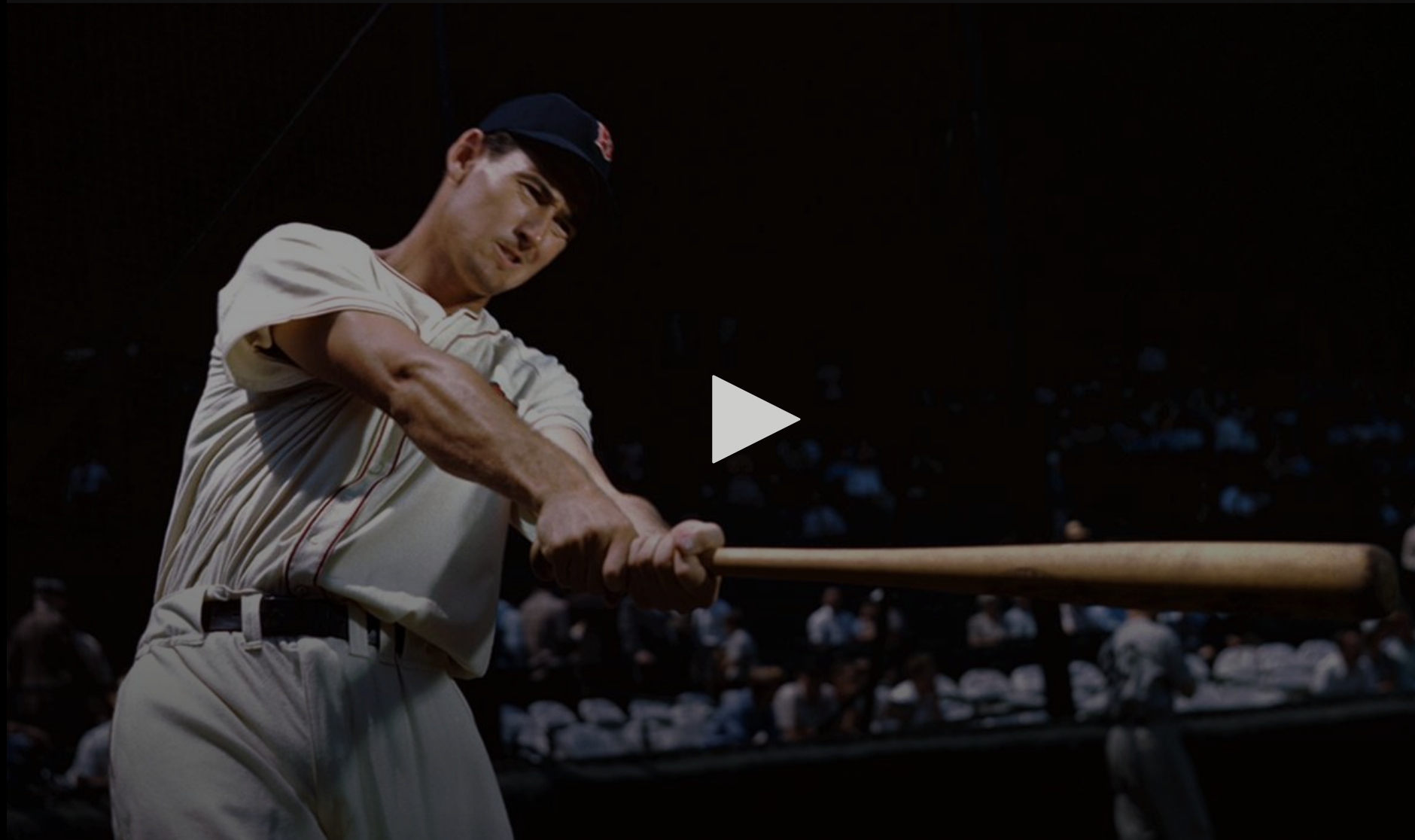
In anticipation of the documentary “AMERICAN MASTERS: Ted Williams: ‘The Greatest Hitter Who Ever Lived’ airing on PBS tonight (7/23) at 9:00 pm Aviva reminisces on her phone interview with Ted Williams in the making of The Life and Times of Hank Greenberg.
In a bonus feature from Aviva’s The Life and Times of Hank Greenberg Documentary, “Hitting in the Golden Age,” Ted Williams said in his phone interview with Aviva on Hank:
“He didn’t hit those smashing line drives that just got into seats real fast. He was a fly ball hitter. But he hit long flies, and of course you gotta hit a long fly to get a home run. And he was conscious that when he hit the ball good in the air things happened. And I’d be playing deep, and I’d think “this is just a fly,” I got to go back a little more, then a little more, and it kept going and, hell, it’s in the third deck! His ball carried.
Pretty near all hitters, they’ve got God’s gifted ability. They hit the ball, they’ve got that good position, and bam! They’ve got everything going. But what separates a lot of guys that have that ability, and becoming great is their thinking and correcting and making every time at bat or every swing a better one and a corrected swing over the time before. “I got to sharpen up, work it up!”
Greenberg could be struck out. A lot of pitchers used to say, “Just give me a chance, that’s all. All I’ll do is throw a good high, tight fastball. Well I heard them talk about that, but I also saw them when they talked like that there’s another one going on the upper deck, and it might have been a curve, it might have been anything, but he had such good all around power and ability and smarts… and smarts… and smarts, that he just didn’t let them get by with the same thing all the time. And that was one thing, if anything impressed me, was the fact about Greenberg– I knew he was a smart hitter.
He always wanted to talk about the game and always wanted to talk about the pitchers and the hitters… and he’s just absolutely a great guy. I thought an awful lot of him.
Hank was not a real fancy fielding first baseman. He was a big guy, a wonderful target. He was dependable. But hitting is what Hank Greenberg was really renowned for.”
In this bonus feature, Caral Gimbal, Hank’s first wife, also said, “Hank would always tell him, ‘You just have all this natural talent, you run like a gazelle, but why don’t you work on your fielding? You’re a terrible fielder.’ Ted would say, ‘I’m paid for hitting not fielding,’ and he couldn’t care less about the fielding. And they’d have these arguments. He said, ‘Hank, you’re paid for hitting, you’re not paid for fielding.'”

Recent Comments