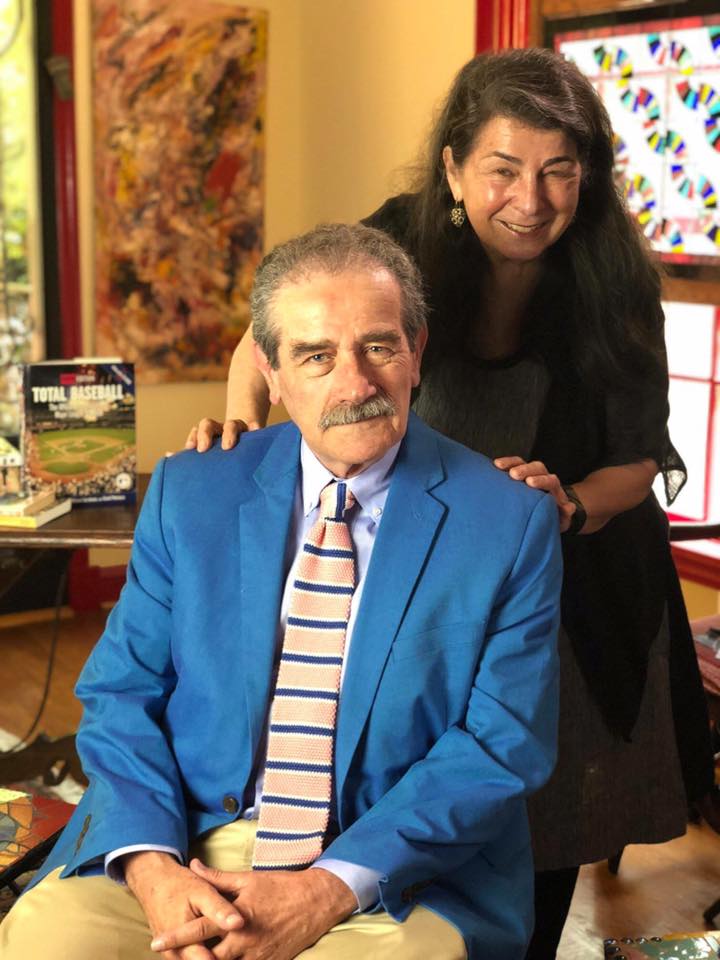
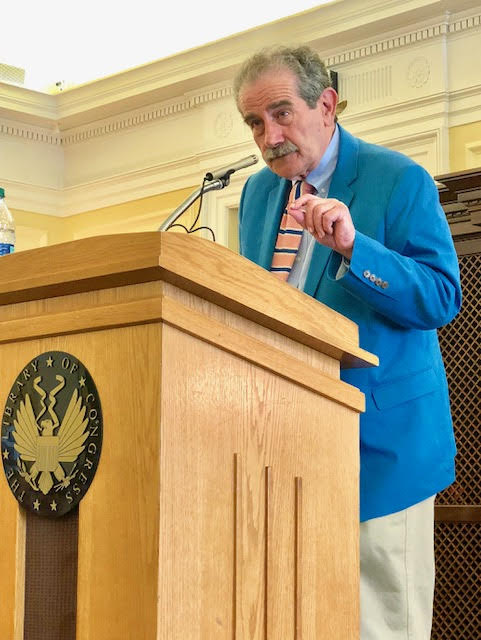
Aviva Kempner had the great pleasure of interviewing MLB historian John Thorn this past Friday, July 13th for the Moe Berg Documentary. Thereafter, on July 14th at the Library of Congress, Aviva and the Ciesla Foundation staff got the chance to hear Thorn speak on “The Origins of the Modern Game: The Laws of Baseball”.
“I truly learned so much about the origins of baseball and was impressed by the full house who came to see you speak.” – Aviva Kempner
“… Although many parts of his life and exploits remain mysterious to this day, another Moe Berg movie is due from documentarian Aviva Kempner next year.”
Author: Michael Cooper
Publisher: The New York Times
Date: July 6, 2018
Link to article: https://www.nytimes.com/2018/07/06/arts/music/dr-atomic-santa-fe-john-adams-peter-sellars.html
SANTA FE — The lights of Los Alamos, the birthplace of the atomic bomb, can be seen at night from the idyllic open-air theater of Santa Fe Opera. So around here, John Adams and Peter Sellars’s “Doctor Atomic,” about the bomb and its creators, is not just a meditation on the invention of a weapon that changed the world.
It is also very much a local story — a complicated one.
“One of the most powerful things about doing ‘Doctor Atomic’ here is to make a history from New Mexico,” said Mr. Sellars, who assembled the opera’s libretto from historical sources, directed its premiere in 2005 and is rethinking aspects of it for the new Santa Fe production he is creating, which opens on July 14 and runs through Aug. 16.
“Here the story is, of course, the Los Alamos laboratory,” he added, “but also the ‘downwinders,’ the people living with all these cancers from all the test sites — and the pueblos that are 10 minutes away from Los Alamos, where most people and their families were employed.”
Other operas have been staged at or near the locales where they are set; Plácido Domingo once starred in a television production of Puccini’s “Tosca” that was filmed live at the locations in Rome where the action takes place. But the Napoleonic wars that serve as the backdrop of “Tosca” are nowhere near as hotly debated as the creation of the atomic bomb, and the decision to use it on Japan at the end of World War II.
The nuclear threat that is the opera’s theme has been in the headlines more than usual lately. The United States recently seemed closer to contemplating the use of nuclear weapons than it had in decades. President Trump, before his recent disarmament talks with North Korea, issued a bellicose warning last summer, saying threats to the United States would be “met with fire and fury like the world has never seen.”
The bomb is never far from the conversation here. Los Alamos remains the home of a national laboratory that still works on the nation’s nuclear weapons. The success of the Manhattan Project — in which the polymathic physicist J. Robert Oppenheimer was tapped by the no-nonsense Army Gen. Leslie Groves to run a secret laboratory to race Nazi Germany in creating an atomic weapon — is still locally celebrated.
A statue of Oppenheimer and Groves stands outside Fuller Lodge, at the former boys’ school where the scientists gathered during the war. Gift shops sell cocktail glasses with Oppenheimer’s silhouette and his martini recipe painted on the outside (“4 ounces good gin, a smidge of dry vermouth, lime juice and honey syrup”). One of the streets, Trinity Drive, is named after the Trinity test, when the world’s first atomic bomb exploded in 1945, some 200 miles to the south. A picnic late last monthcelebrated the 75th anniversary of the lab’s founding.
The director of Los Alamos National Laboratory, Dr. Terry Wallace, is a second-generation Los Alamos scientist who said that when he was growing up there, his Boy Scout troop would collect depleted uranium, something that would be unimaginable today. He expressed concern that the opera, which portrays the creation of the bomb as a tragedy, risked simplifying a complex moral calculus.
“As the director of Los Alamos, I have to make sure that we have a safe, reliable and effective nuclear deterrent,” he said in an interview in Fuller Lodge. “And I certainly would never advocate using that deterrent. But the reason we have a strategic deterrent is clear. There’s only one reason: so nobody uses a nuclear weapon on us. We’re very dedicated to that mission.”
Elsewhere in New Mexico, the state’s atomic legacy is viewed differently. As opera rehearsals were underway in Santa Fe last month, Tina Cordova, 58, a small-business owner who lives in Albuquerque, was in Washington testifying before the Senate. She was part of a group seeking compensation from the government for damage she contends was caused by the Trinity test, which was so powerful that it melted the sand into a glasslike substance eventually named trinitite.
“The government has always characterized the area as remote and uninhabited, but we know from the census data that there were thousands of people living in a 50-mile radius of the test site,” Ms. Cordova, a founder of the Tularosa Basin Downwinders Consortium, testified. One of those people, she said, was her father, who was a 4-year-old living in Tularosa, about 40 miles from the Trinity site, when the bomb exploded. He died many years later of cancer.
Mr. Sellars said that he planned to cast downwinders in his new production. Some will stand as silent witnesses in a scene in which General Groves explains that, to maintain secrecy, he will not send evacuation forces into nearby areas. (A medical officer tells him: “Sir, no cure has yet been found for the agonies that result from overexposure to fallout and radiation.”) Downwinders light candles each year to commemorate those who died of cancer; Mr. Sellars hopes to incorporate that ceremony into the opera as well.
One morning last week, he and the opera’s choreographer, Emily Johnson, took a break from rehearsals to visit the Puye Cliff Dwellings, the centuries-old remains of a Native American settlement on the Santa Clara Pueblo, a short drive from Los Alamos.
“We really want this to be from here,” Ms. Johnson said, adding that she had been particularly grateful that people from several pueblos had offered to perform a sacred corn dance at the opera house before the performances. (There is also a corn dance within the opera, scored by Mr. Adams, and the libretto includes a traditional Tewa song.)
Mr. Sellars said that his new production would not labor to recreate the war era through its sets and costumes, as his earlier one did. Even the bomb itself — called “the gadget” by the scientists who built it — will be a reflective sphere rather than a facsimile of the real one; Mr. Sellars wants it to represent all nuclear weapons, not just the prototype.
He and Ms. Johnson toured the cliff dwellings with Mina and Jordan Harvier, Native Americans who live on the Santa Clara Pueblo and are helping arrange the corn dance. They spoke about the complex relationship the pueblo has had with Los Alamos over the decades. Both had grandmothers who worked there as housemaids; both noted that there had been years of concerns about contamination and pollution from the lab. (The government has spent hundreds of millions of dollarscleaning up Los Alamos, but still has more to do.)
“My grandparents always told me that Native Americans are the caretakers of this earth,” Ms. Harvier said shortly before she descended into a round kiva, or ritual room, with Mr. Sellars and looked at the dried remains of what had once been the pueblo’s reservoir.
Mr. Sellars said that he hoped that the opera would bring people together to share their experiences and better understand one another. “That is the hope,” he said. “And what opera can do, because opera is slow: It gives people the time to think and consider — and across ‘Doctor Atomic,’ to consider more deeply and more quietly what the long-term questions are.”
There will be a contingent in the audience from Los Alamos. Heather McClenahan, the executive director of the Los Alamos Historical Society — which operates a museum that gives a sense of what life was like in a lab so secret that the babies who were born there had their addresses listed as “P.O. Box 1663, Santa Fe” on their birth certificates — said that a group planned to attend the opera and discuss it afterward at UnQuarked, a local wine bar.
J. Arthur Freed, a former librarian at the lab, plans to go, as well. Which is not exactly surprising: He is something of a “Doctor Atomic” groupie and has seen staged productions by 11 opera companies in seven countries. Mr. Freed, a member of the J. Robert Oppenheimer Memorial Committee, formed to commemorate Oppenheimer, said that he viewed the work as historical fiction, but found it rewarding.
“I didn’t expect it to be gung-ho atomic weapons,” he said in a telephone interview. “I rather expected it to have an overall anti-nuke aspect, and why wouldn’t it? Don’t misunderstand me: I worked for the lab for 33 years, I think it’s a wonderful place, and I think it did perform and continues to perform an extremely important function for this country.”
Ms. Cordova, who testified in front of Congress, said in a telephone interview that she was intrigued by the prospect that “Doctor Atomic” might bring together people with different points of view about the bomb.
“To come together through an opera, to sort of recognize that there were many sides to this,” she said, “could be hugely cathartic for all of us.”
Ryan Braun of the Milwaukee Brewers connecting for his second home run of the game against the Phillies at Citizens Bank Park in Philadelphia, June 8, 2018. (Corey Perrine/Getty Images)
(JTA) — June 8 was the most productive day for Jewish batters in Major League Baseball history.
Five members of the tribe combined for six home runs on Friday to help their respective teams to victory. Here’s the scorecard:
Ryan Braun, “The Hebrew Hammer,” hit two home runs, driving in five runs to lead the Milwaukee Brewers to a 12-4 win over the Philadelphia Phillies — who have a Jewish manager in Gabe Kapler. Braun’s three-run shot with two outs in the first inning broke a scoreless tie. His two-run homer, again with two outs, left Philadelphia’s Citizens Bank Ballpark with an exit velocity of 112.9 miles per hour, according to the new high-tech analytics. It’s the hardest ball Braun has hit since they started measuring these things in 2015.
Kevin Pillar, the Toronto Blue Jays outfielder who is known more for his outstanding defensive play than his skills at the plate, hit his sixth homer of the year and third in seven games in a 5-1 win over the Baltimore Orioles. His eighth-inning solo shot gave the Blue Jays their final run. Danny Valencia, the third baseman for the O’s that night, was the only Jewish position player not to hit one out on Friday.
Alex Bregman hit his eighth home run, a solo drive, in the Houston Astros’ 7-3 win over the Texas Rangers. The Astros selected his younger brother A.J. in the recent MLB draft, so it’s conceivable they could become the first set of Jewish brothers to play on the same team since Norm and Larry Sherry were members of the Los Angeles Dodgers from 1959 to 1962.
“Collusion and Collision: Hank Greenberg in Pittsburgh in 1947”
When: Thursday, June 21, 2018 at 1:15 p.m. – 1:40 p.m. Where: Grand Ballroom 1
With: John Thorn, Official Sports Historian and Bijan C. Bayne, Sports Historian
For decades, an unspoken “gentlemen’s agreement” kept professional baseball segregated. Hank Greenberg, in the final year of his career, showed solidarity with African-American players and helped signify necessary change. This discussion will put the gentlemen’s agreement in the context of other open secrets between team owners and elaborate why Greenberg was in a unique position to empathize with marginalized athletes. In 1947, Tigers team owner Walter Briggs colluded with other team owners to exile Greenberg to the National League. Greenberg was disillusioned enough to quit the game that he loved, but the Pittsburgh Pirates’ owners enticed him to return. They installed a new bullpen, nicknamed “Greenberg Gardens,” in Forbes Field to make it easier for him to hit home runs and offered him the first ever $100,000 baseball contract. Greenberg, as a Jew who suffered anti-Semitic insults from fans and rival players, was in a unique position to relate to the young Jackie Robinson in May of 1947 when the Brooklyn Dodgers played the Pirates. During the game, Robinson and Greenberg collided at first base. Greenberg checked that Robinson was not hurt and offered the rookie player encouragement. Footage will contextualize this discussion of business practices and racism of the time, as well as shifting norms. Kempner, Thorn and Bayne will also examine contemporary ownership and racism in baseball.
Aviva Kempner makes award-winning documentaries about underknown Jewish heroes. Kempner is finishing a documentary on Moe Berg, the catcher who spied for the U.S. during World War Two. She made Rosenwald, a documentary about Chicago philanthropist Julius Rosenwald’s partnership with Booker T. Washington in building 5,000 schools for African Americans in the Jim Crow South; Yoo-Ho Mrs. Goldberg, about Gertrude Berg, who created the first television sitcom; and the Emmy nominated and Peabody awarded The Life and Times of Hank Greenberg, about the Hall Famer slugger who faced anti-Semitism during the ’30s. She also produced the Partisans of Vilna, about Jews fighting the Nazis.
John Thorn <https://ourgame.mlblogs.com> is the Official Historian of Major League Baseball and the author of many baseball books.
Bijan C. Bayne is a sports historian who has researched, written for, and been interviewed in various films and television shows. He appears in the 2017 movie The First to Do It. In April 2014, he appeared on TV One’s Unsung Hollywood’s episode “The Harlem Globetrotters.” The same year, he was interviewed and featured in Brian Culkin’s documentary The Mission. In 2015, Bayne co-wrote, directed, and helped cast the pilot for the reality series Team of Dreams. In August 2009, he served as moderator for the Filmmakers’ Panel at the seventh annual Martha’s Vineyard African American Film Festival(on the topic “Black Film in The Age of Obama”). He has written and presented extensively on Black baseball, and the Latin American contribution to the game.
“Moe Berg: All-Star Espionage?”
When: Thursday, June 21, 2018 at 6:40 p.m. – 7:30 p.m. Where: Grand Ballroom 2
Moe Berg, Photo: National Baseball Hall of Fame
Filmmaker Aviva Kempner will show a 24-minute work in progress clip, entitled “Moe Berg: All-Star Espionage?”, that highlights Berg’s first trip to Japan with Herb Hunter, Lefty O’Doul and Ted Lyons to teach baseball seminars at Japanese universities and later his return to Japan in 1934 for an exhibition tour with All-Star players Babe Ruth, Lou Gehrig, Charlie Gehringer, Jimmie Foxx and Lefty Gomez. The completed full-length documentary film will be ready in 2019.
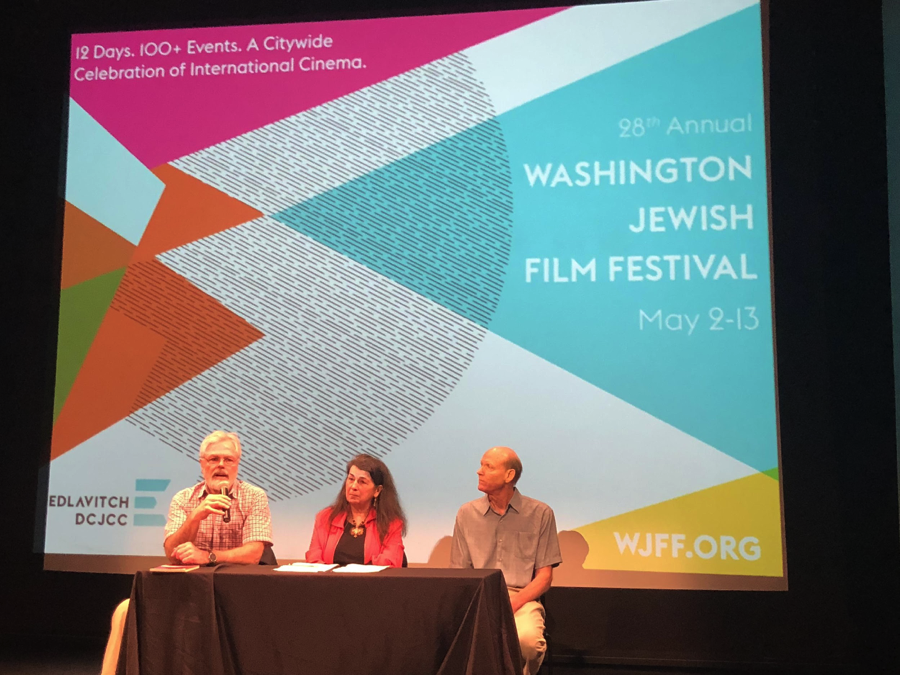
On Sunday, May 6, 2018, the Ciesla Foundation screened a work-in-progress titled “Moe Berg: All-Star Espionage?” to a full house at the Edlavitch DCJCC at the 38 th Washington Jewish Film Festival.
The 23-minute clip highlighted Berg’s first trip to Japan with Herb Hunter, Lefty O’Doul and Ted Lyons to teach baseball seminars at Japanese universities and later his return to Japan in 1934 for an exhibition tour with All Stars Babe Ruth, Lou Gehrig, Charlie Gehringer, Jimmie Foxx and Lefty Gomez. The work in progress posed the question of what Berg was doing when he sneaked onto the roof of St. Luke’s hospital to film the city skyline with his Bell & Howell?
The work -in-progress clip included home movies from Lefty Gomez, Jimmie Foxx, and original Moe Berg footage in Japan. Included was interviews with; Robert Fitts, Author of Banzai Babe Ruth, Sam Berg, Moe’s brother, Irwin Berg, Moe’s cousin, sports columnist Ira Berkow, Vernona Gomez, daughter of Lefty Gomez, Julia Ruth Stevens, daughter of Babe Ruth, Hank Thomas, grandson of Walter Johnson, baseball greats Elden Auker, Joseph Cascarella, Tommy Thomas, Charlie Wagner, Monte Weaver and many more.
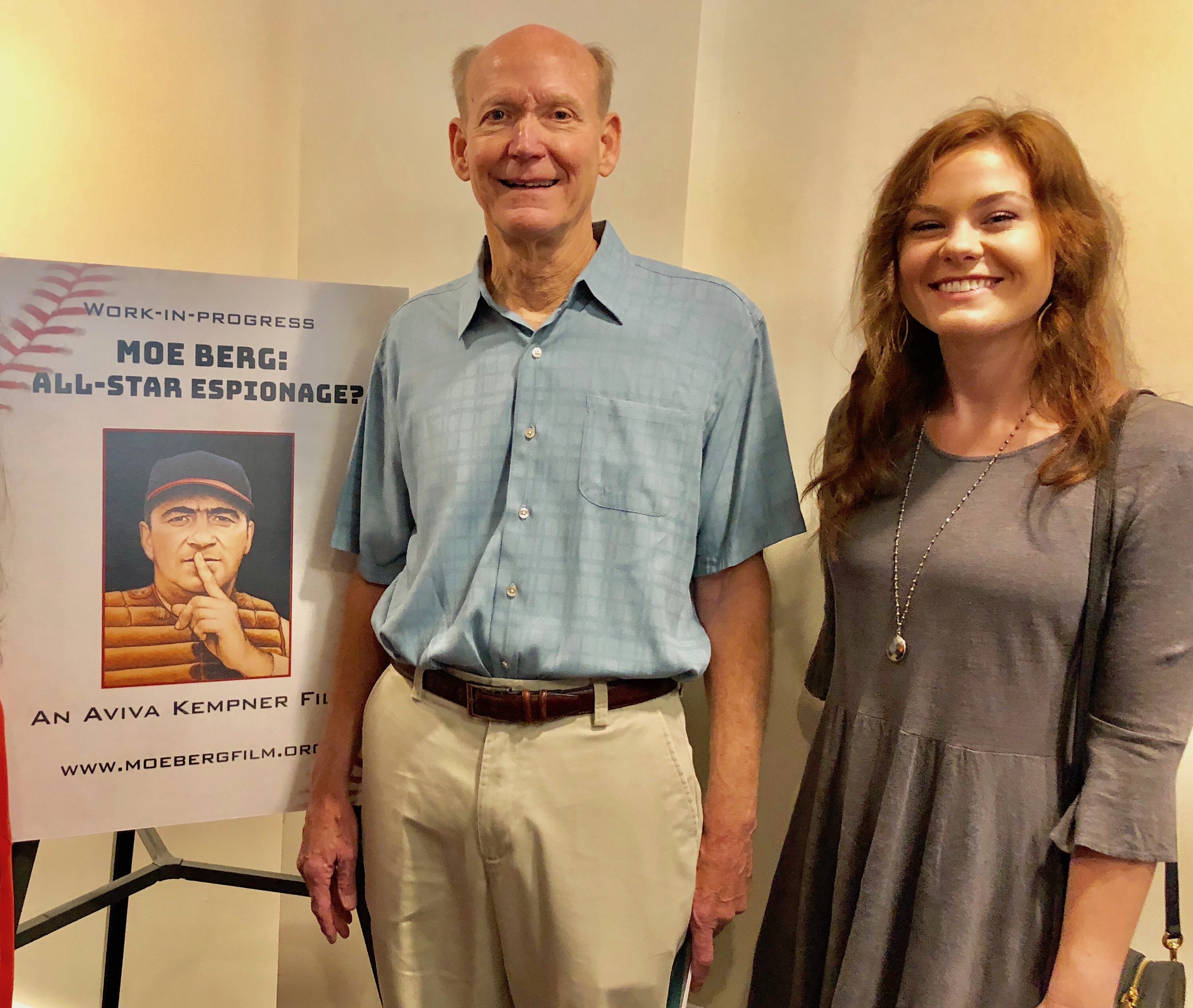
A highlight of the morning screening was Aviva Kempner introducing the audience to both Katie Banas, Vernon Louis “Lefty” Gomez’s great granddaughter and Hank Thomas, grandson and biographer of Walter Johnson.
Grandson and biographer of Walter Johnson, Hank Thomas (left) and great granddaughter of Lefty Gomez , Katie Banas (right)
After the screening, director Aviva Kempner, Hank Thomas, grandson and biographer of Walter Johnson, and Intelligence Analyst Richard Willing joined together for a lively panel discussion. Aviva provided a glimpse into additional aspects of the full-length Moe Berg documentary in production and Hank Thomas shared stories of Moe Berg babysitting his mother during Washington Senator ball games. Richard Willing expounded on Moe’s breadth of knowledge and how he seemed to impress everyone he came in contact with.
Richard Willing, Aviva Kempner, Hank Thomas
We want to thank everyone for coming! Stay tuned for additional updates



 For decades, an unspoken “gentlemen’s agreement” kept professional baseball segregated. Hank Greenberg, in the final year of his career, showed solidarity with African-American players and helped signify necessary change. This discussion will put the gentlemen’s agreement in the context of other open secrets between team owners and elaborate why Greenberg was in a unique position to empathize with marginalized athletes. In 1947, Tigers team owner Walter Briggs colluded with other team owners to exile Greenberg to the National League. Greenberg was disillusioned enough to quit the game that he loved, but the Pittsburgh Pirates’ owners enticed him to return. They installed a new bullpen, nicknamed “Greenberg Gardens,” in Forbes Field to make it easier for him to hit home runs and offered him the first ever $100,000 baseball contract. Greenberg, as a Jew who suffered anti-Semitic insults from fans and rival players, was in a unique position to relate to the young Jackie Robinson in May of 1947 when the Brooklyn Dodgers played the Pirates. During the game, Robinson and Greenberg collided at first base. Greenberg checked that Robinson was not hurt and offered the rookie player encouragement. Footage will contextualize this discussion of business practices and racism of the time, as well as shifting norms. Kempner, Thorn and Bayne will also examine contemporary ownership and racism in baseball.
Recent Comments